

Services
Veneers
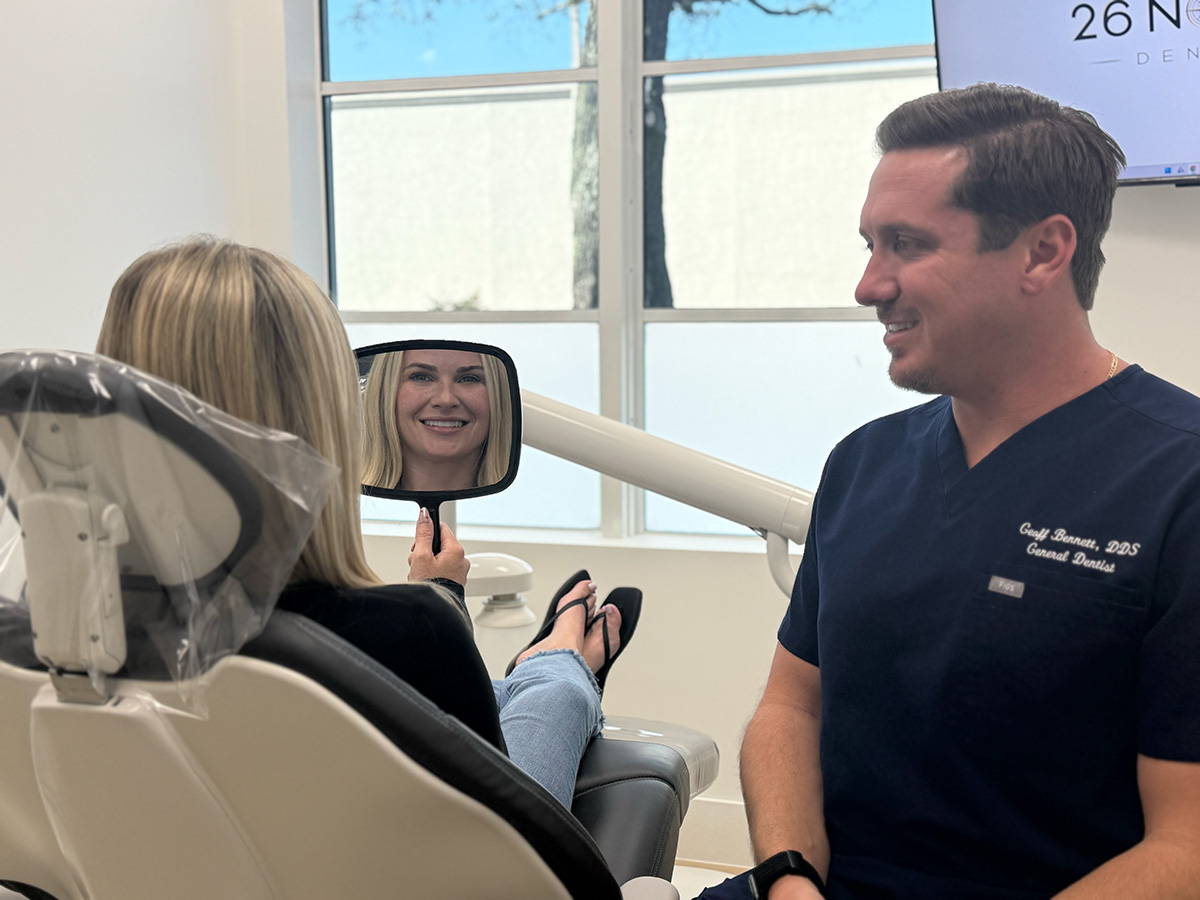
Veneers
Chips, stains, and uneven teeth have a way of making people self-conscious in situations where they’d rather just be present. If you’ve been avoiding photos or holding back your smile, veneers in Parkland, FL, at 26 North Dental might be worth a closer look. Dr. Geoff Bennett and our team work with patients who want real, lasting cosmetic results without overcomplicating the process. We offer advanced 3D-printed hybrid veneers and traditional porcelain veneers, allowing us to match treatment to your goals, timeline, and budget. During your consultation, we’ll explain the advantages of each option and recommend the approach that best fits your smile.
What Are Dental Veneers?
Veneers are thin shells bonded to the front surface of your teeth to improve their appearance. They’re a good fit when the underlying tooth is structurally sound, but the appearance is the problem. Whitening can lift surface stains, but it won’t fix a chip, close a gap, or reshape a tooth that’s worn down unevenly. Veneers handle all of those things in a way that looks natural and holds up over time.
One reason patients lean toward veneers over crowns is that veneers preserve more of the natural tooth. A crown covers the entire tooth, which requires more reshaping. Veneers only cover the front-facing surface, so the approach is more conservative while still delivering a noticeable change.
Porcelain vs. Composite: What’s the Difference?
Both materials work well, but they’re not interchangeable. The right choice depends on your goals, habits, and budget.
Porcelain veneers are crafted by a dental ceramist and bonded at a second appointment. They do not stain and reflect light in a way that closely mimics natural enamel. They also tend to last longer with proper care. The tradeoff is that they require a small amount of enamel removal, which makes the process permanent.
Composite veneers are shaped and bonded directly onto the tooth in a single visit. They require less enamel removal and generally cost less upfront. If a composite veneer chips or wears down, it can usually be repaired chairside without starting over. They may need touch-ups more often than porcelain, but for patients who want results without multiple appointments or with minimal tooth preparation, they’re a practical option.
We’ll go through both with you during your consultation, show examples, and give you a straightforward recommendation based on what we see in your mouth and what you’re hoping to achieve.
When Veneers Make Sense
Veneers aren’t the answer for every cosmetic concern, but they’re well-suited to a specific set of situations. They tend to work best for:
- Chips or minor fractures that don’t compromise the tooth’s structure
- Persistent discoloration that whitening treatments haven’t been able to fix
- Worn or uneven teeth that affect the overall look of your smile
- Minor spacing or alignment issues where orthodontics isn’t preferred
On the other hand, if there’s active decay, significant bite problems, or very little enamel left, veneers may not be the right starting point. In those cases, we’ll tell you what needs to be addressed first and what your options look like from there.
What the Veneer Process Looks Like
The process is straightforward and broken into clear stages, so there are no surprises along the way.
Your first visit includes a full consultation, during which we take digital photos and scans to map out what treatment would look like. This gives you a preview of estimated results before committing to anything.
For porcelain veneers, the next step involves light enamel shaping, followed by a digital scan or impression. Temporary veneers are then placed to protect your prepared teeth and provide a preview of your new smile. These temporaries closely mimic the shape and appearance of the final veneers, giving you the opportunity to "test drive" your new smile and ensure the look, feel, and bite are comfortable and natural. Any necessary adjustments can be communicated to the lab before your permanent veneers are crafted. At your final appointment, we carefully evaluate the fit, color, and bite of the completed veneers before securely bonding them into place.
For composite veneers, treatment is typically completed in two appointments. During the first visit, Dr. Bennett captures a digital scan of your teeth and works with the laboratory to create a customized digital smile design. This digital mock-up allows you to preview the planned changes and ensures the final result is tailored to your goals. The laboratory then fabricates a custom injection matrix based on the approved design. At your second appointment, Dr. Bennett uses this matrix-guided technique to precisely place the composite material, creating veneers that closely match the digital plan. The restorations are then refined and polished, allowing you to leave with a beautifully enhanced smile the same day.
Throughout the process, we use imaging to confirm the health of the underlying tooth before anything goes on top. There’s no skipping that step.
How to Care for Your Veneers
Veneers don’t require a complicated maintenance routine, but a few habits go a long way toward making them last.
Brush twice a day with a non-abrasive toothpaste and floss daily. Avoid chewing ice, biting your nails, or using your teeth to open packaging. If you grind your teeth at night, a custom nightguard is worth considering, as grinding can put real stress on veneers over time. Regular checkups let us monitor the condition of your veneers and catch any changes early.
Porcelain veneers typically last 10 years or longer before needing replacement, while composite and 3D-printed hybrid veneers generally last around 5–7 years. Composite veneers may also require occasional polishing or minor touch-ups over time. While both options will eventually need replacement, good oral hygiene, regular dental checkups, and avoiding habits like teeth grinding can help extend their lifespan well beyond these averages.
Common Veneer Questions
How long does treatment take?
Both composite and porcelain veneers typically require two appointments. For composite veneers, the first visit is used to scan and plan your smile, and the second visit is for delivery using a custom matrix. Porcelain veneers also generally involve an initial preparation appointment followed by a second visit to place the final restorations.
Will they look natural?
Yes. We carefully customize the shade, shape, and proportions of your veneers to complement your existing smile and facial features. Whether we’re matching surrounding teeth or creating an entirely new smile design, we take detailed photographs and work closely with our dental lab to achieve a natural, harmonious result. Our goal is simple: to enhance your smile in a way that looks beautiful, balanced, and uniquely you.
Is the process reversible? Because porcelain veneers require enamel removal, the procedure is permanent and not reversible. Composite veneers typically involve minimal to no enamel removal, making them closer to reversible in many cases. Hybrid 3D-printed veneers are also considered reversible because they generally require little to no enamel reduction and can often be removed or replaced without permanently altering the natural tooth structure.
Schedule Your Veneer Consultation in Parkland
If you’ve been thinking about veneers but aren’t sure where to start, a consultation is the most practical next step. Call 26 North Dental to book your visit. We’ll look at your teeth, talk through what’s bothering you, show you what’s possible, and give you an honest recommendation. Come with questions. Leave with a plan.
FAQ
Are veneers painful?
Most patients tolerate veneer treatment very well. For porcelain veneers, a local anesthetic may be used during enamel shaping to keep you comfortable. Composite and 3D-printed hybrid veneers often involve little to no tooth reduction, so discomfort is usually minimal.
How many veneers do I need?
It depends on your smile goals. Some patients only need one or two veneers to repair chips or uneven teeth, while others choose several veneers across the front teeth for a more complete smile transformation. We’ll help you decide what looks balanced and natural.
Do veneers stain?
Porcelain veneers are highly stain-resistant. Composite and 3D-printed hybrid veneers can pick up surface stains over time, especially from coffee, tea, red wine, or tobacco, but regular cleanings and polishing can help maintain their appearance.
Can I eat normally with veneers?
Yes. Once your veneers are bonded, you can eat normally. We recommend avoiding habits that put extra force on them, such as chewing ice, biting fingernails, or using your teeth to open packages.
Will insurance cover veneers?
Veneers are usually considered cosmetic, so they are typically not covered by dental insurance. During your consultation, our team can review costs, options, and any available payment solutions.
Let’s talk through your options.
Schedule a visit with 26 North Dental and we’ll help you understand what’s happening, what your options are, and what makes sense for your smile.