

Services
Dental Implants
Dental Implants
A missing tooth does more than change the way your smile looks. It affects how you chew, how you speak, and over time, how your jawbone holds its shape. Dental implants in Parkland, FL, at 26 North Dental offer a long-term solution that addresses all of that, not just the gap. Dr. Geoff Bennett and our team take the time to walk you through the process so you can decide whether implants are the right fit for your situation.
What Makes Dental Implants Different
Unlike dentures or bridges, dental implants replace the root of the tooth, not just the visible part. A small titanium post is placed into the jawbone, where it fuses with the surrounding bone over time. Once healing is complete, a custom crown is attached on top, matched to the color and shape of your surrounding teeth.
The result is a restoration that feels stable, functions like a natural tooth, and doesn’t rely on neighboring teeth for support. That last part matters more than most people realize. Traditional bridges require crowning healthy adjacent teeth, which means removing enamel that can’t be restored. Implants avoid that entirely.
Dental implants are also easier to clean and maintain. Because an implant functions like an individual tooth, you can brush and floss around it normally, just as you would a natural tooth. Bridges, on the other hand, require special cleaning techniques and devices to clean underneath and around the connected teeth properly. Implants also cannot get cavities, while the teeth supporting a bridge are more vulnerable to decay. As a result, bridges may need to be repaired or replaced more often, making implants a more cost-effective option in the long run for many patients.
What to Expect During the Implant Process
The process moves in stages, and understanding each one helps reduce the uncertainty. Here’s a general overview of how treatment typically unfolds:
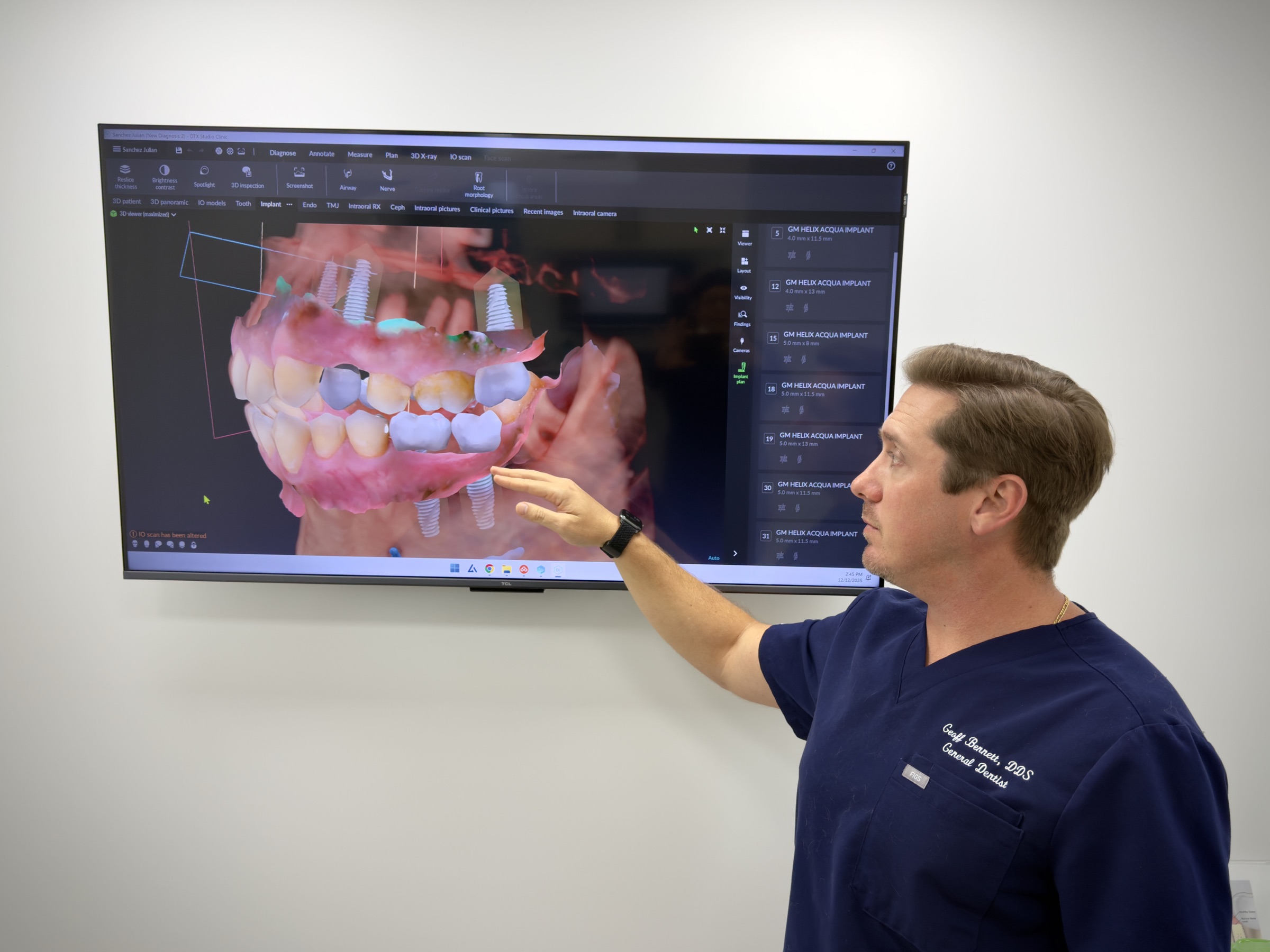
- A thorough consultation with imaging, including a 3D scan, to evaluate bone density and plan implant placement.
- Surgical placement of the titanium post, followed by a healing period while the implant integrates with the jawbone.
- Placement of the final crown once healing is confirmed.
The healing phase typically takes 3–4 months, but it can take as long as 6–8 months depending on bone quality. That can feel like a long time if you’re used to faster dental fixes, but that time is what makes the outcome stable and lasting. Rushing it isn’t an option if you want the implant to hold.
During surgery, we use a variety of techniques designed to help keep you comfortable. Most patients notice vibration and pressure during treatment rather than pain. We also understand that dental anxiety is common, and we can manage it in different ways, including the use of anti-anxiety medication when appropriate. Afterward, some soreness is normal and can be managed with recommended medications and ice. Most patients find the recovery more straightforward and comfortable than they expected.
Does Everyone Need Bone Grafting?
Not always, but it comes up often enough that it’s worth explaining. When a tooth has been missing for a while, the jawbone in that area can begin to shrink. If there isn’t enough bone volume to support an implant, a bone graft may be needed first to rebuild the area before placement.
We evaluate this during your initial imaging. If a graft is necessary, we’ll walk you through what that involves and how it affects your overall timeline. Nothing gets added to your treatment plan without a clear explanation of why it’s there.
How Dental Implants Protect Your Long-Term Oral Health
Filling the gap left by a missing tooth isn’t just cosmetic. When a tooth is lost, the bone underneath it no longer receives the stimulation it needs to stay dense. Over time, bone loss in that area can affect the shape of your face and the stability of neighboring teeth.
Dental implants in Parkland address this at the root level, literally. Because the post integrates with the bone, it provides the kind of stimulation that prevents jawbone deterioration. Patients often notice improvements in chewing strength, fewer food restrictions, and, in some cases, clearer speech as well.
The surrounding teeth also benefit. Without something filling that space, adjacent teeth can drift toward the gap over time, which creates alignment issues that are harder and more expensive to fix later.
Common Questions We Hear
Patients come in with a lot of the same concerns, and we’d rather address them upfront than have you wonder.
How long do implants last? With routine care, including regular cleanings and good home hygiene, implants can last many years and often a lifetime. The crown on top may eventually need to be replaced, but the implant itself tends to be very durable.
Is the procedure painful? The procedure is performed under anesthesia to help keep you comfortable during implant placement. Most patients describe pressure or vibration rather than pain. Some soreness and swelling afterward are normal, but discomfort is typically mild and can be managed with over-the-counter or prescribed medications.
What anesthesia options are available? We’ll discuss this during your consultation based on your comfort level and the specifics of your case. We currently offer local anesthesia and local anesthesia combined with oral sedation or other anti-anxiety medication.
How will the crown be matched to my other teeth? We take every precaution to ensure your crown blends seamlessly with your natural teeth. To achieve the best possible color match, we take multiple photographs with shade tabs and send them to our dental laboratory so the crown can be customized to your smile.
For more challenging cases, we can even bring the laboratory technician into our office to personally evaluate and match your teeth. We provide a level of attention that sets us apart from many other dental offices and helps ensure the most natural-looking results possible.
We also use advanced 3D scanning technology to capture highly accurate digital measurements of your teeth. This allows the laboratory to precisely match not only the color, but also the shape, contours, and overall appearance of your surrounding teeth, creating a beautiful, harmonious restoration that looks and feels natural.
Why Choose 26 North Dental for Dental Implants?
We’re a small practice where treatment decisions don’t get made in a rush. When you sit down with our team, we’re looking at your actual imaging, your bone structure, your goals, and your timeline. We take the time to explain what we see, answer your questions, and discuss our recommendations without pressuring you to make a decision before you’re ready.
Dr. Bennett is committed to continuing education and regularly completes advanced training to stay current with the latest implant techniques, technology, and evidence-based best practices. To support precise treatment planning, our office uses advanced 3D imaging technology that allows us to evaluate your anatomy in detail and place implants with greater accuracy and predictability. We also exclusively use one of the world’s most trusted dental implant systems, chosen for its long-term reliability and proven clinical success.
If dental implants aren’t the right option for your situation, we’ll let you know. Our goal is to help you make the best decision for your health, whether that means implants or another treatment that better fits your needs. At every step, you’ll receive honest guidance, modern care, and a treatment plan tailored to you.
Frequently Asked Questions About Dental Implants
Do dental implants hurt?
This is one of the most common concerns we hear. Implant placement is performed under local anesthesia to help keep you comfortable during the procedure. Most patients report feeling pressure or vibration rather than discomfort. After treatment, some soreness and swelling are normal, but these symptoms are typically manageable with ice and recommended medications. Many patients are surprised to find that recovery is easier than they expected.
How much do dental implants cost?
The cost of dental implants varies depending on several factors, including the number of teeth being replaced, whether bone grafting is needed, and the complexity of the treatment. Because every patient’s situation is different, the best way to receive an accurate estimate is through a consultation and diagnostic imaging. We’ll review your treatment options, explain any recommended procedures, and provide a clear breakdown of costs before treatment begins.
Am I a candidate for dental implants?
Many adults with one or more missing teeth are good candidates for dental implants. The most important factors are overall oral health and having enough jawbone to support the implant. During your consultation, we use advanced imaging to evaluate your bone structure and determine whether implants are the best option for your situation. If additional treatment such as bone grafting is needed, we’ll explain why and discuss your options.
How long does the dental implant process take?
The timeline varies from patient to patient. After the implant is placed, a healing period is required for it to fuse with the jawbone. In most cases, healing takes about 3–4 months, though some patients may require additional time depending on bone quality and other factors.
Can dental implants replace multiple missing teeth?
Yes. Dental implants can be used to replace a single missing tooth, multiple missing teeth, or even support a full-arch restoration in certain cases. Your treatment plan will be customized based on the number of teeth being replaced and your oral health needs.
Will my dental implant look natural?
Yes. Each implant crown is custom-made to match the color, shape, and contours of your surrounding teeth. We use photographs, shade matching, and digital scanning technology to create restorations that blend naturally with your smile.
How do I care for a dental implant?
Dental implants can be cared for much like natural teeth. Regular brushing, flossing, routine dental visits, and professional cleanings help keep the surrounding gums healthy and support the long-term success of the implant.
What happens if I don’t replace a missing tooth?
Leaving a gap untreated can lead to jawbone loss and may allow neighboring teeth to shift out of position over time. This can affect your bite, appearance, and overall oral health. Dental implants help preserve bone and maintain proper tooth alignment.
Are dental implants worth the investment?
Many patients find implants worthwhile because they are stable, long-lasting, and help preserve oral health. Unlike traditional bridges, implants do not require altering healthy neighboring teeth and are often more cost-effective over time due to their durability.
How soon should I get an implant after losing a tooth?
In general, it’s best to schedule a consultation as soon as possible after tooth loss. Waiting too long can increase the risk of bone loss in the area, making treatment more complex and potentially requiring bone grafting before implant placement.
Book a Dental Implant Consultation in Parkland
If a missing tooth has been affecting your daily life, getting a clear picture of your options is a reasonable place to start. Call 26 North Dental to schedule a consultation, and we’ll review your imaging, walk you through what treatment would look like, and answer the questions you’ve been sitting on. No pressure, just straightforward information so you can make a decision that’s right for you.
Let’s talk through your options.
Schedule a visit with 26 North Dental and we’ll help you understand what’s happening, what your options are, and what makes sense for your smile.